The Dark Detail


Look closer.
Every famous painting hides something most people walk straight past. Each of our videos takes one painting, zooms in on one small detail, and follows it: what it is, who put it there, and what restorers, scientists and historians have found out about it.
Watch on YouTube Read our corrections
Run your cursor over the name.Touch the name. There is something in it.

How we work
One painting, one detail, every week. Four rules hold for every video.
Every video starts from a source file
Before there is a script, there is a file of facts: museum records, restoration reports, the artist's own letters, published research. The sources are listed under each video.
A theory is called a theory
When the evidence stops, we say so. If a detail has no documented explanation, we show it, give the readings that exist, and leave the question open.
Mistakes are corrected in public
When we get something wrong, we add a timestamped correction under the video and log it on this page.
Thumbnails are made by hand
Each one is built in Photoshop from the real painting. What we circle on the thumbnail is what the video is about.
Start here
Five videos that show what the channel does.
-

The Bedroom
Vincent van Gogh, 1888
The walls were never meant to be blue. His own letter says so, and the paint still holds the proof.
-
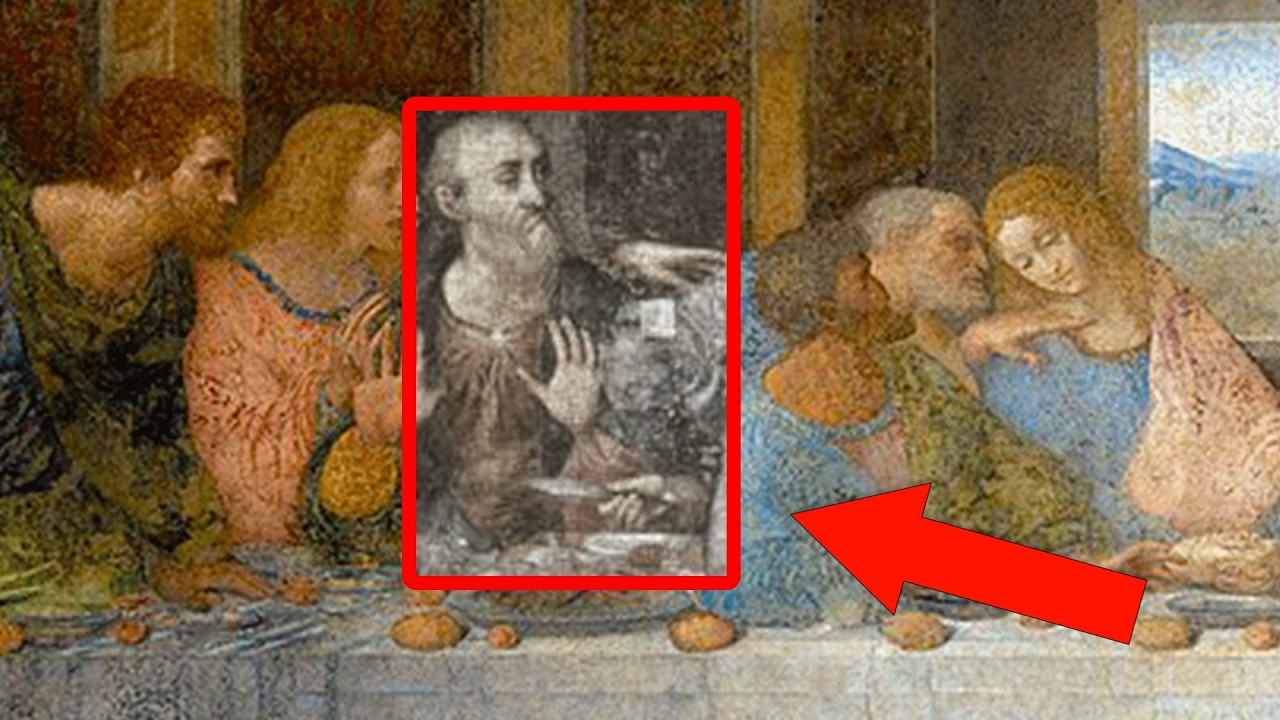
The Last Supper
Leonardo da Vinci, 1495 to 1498
What two decades of restoration found under centuries of repainting, and how much of Leonardo is left.
Watch “What Scientists Found in This Leonardo da Vinci Painting Will Shock You!”
-
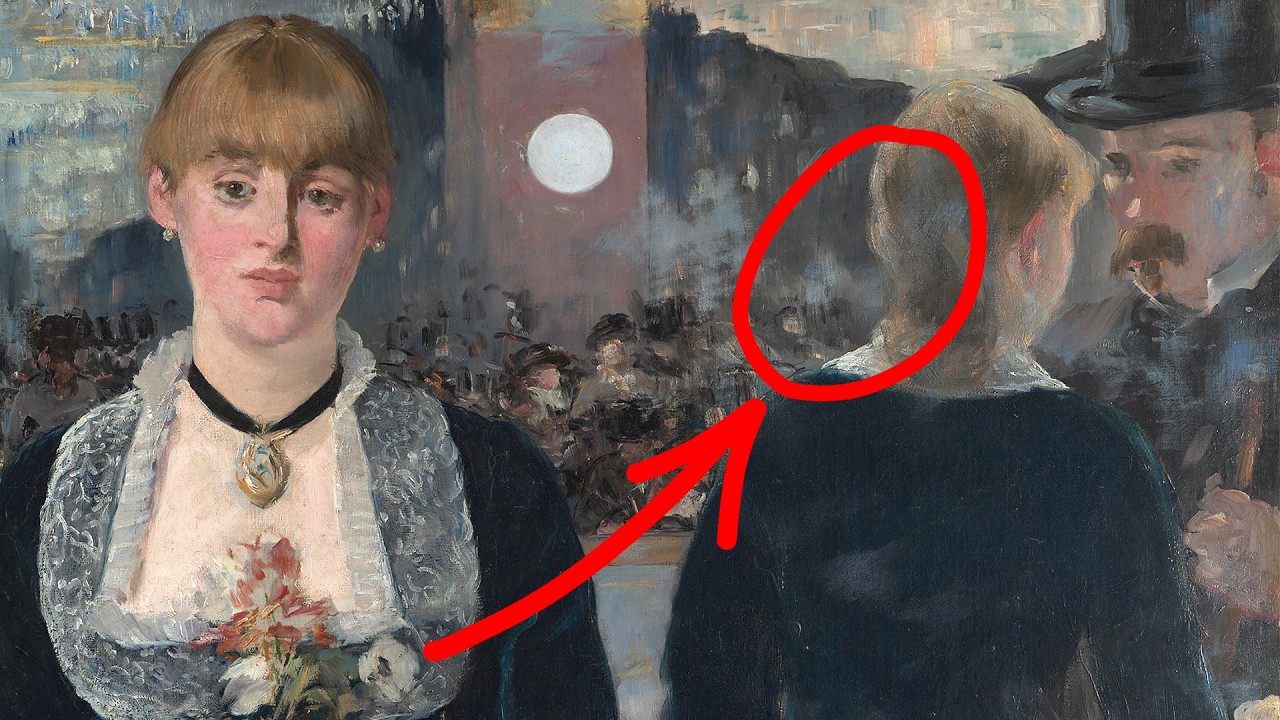
A Bar at the Folies-Bergère
Édouard Manet, 1882
A reflection that sits where no mirror would put it. A mistake, or the point of the picture?
-
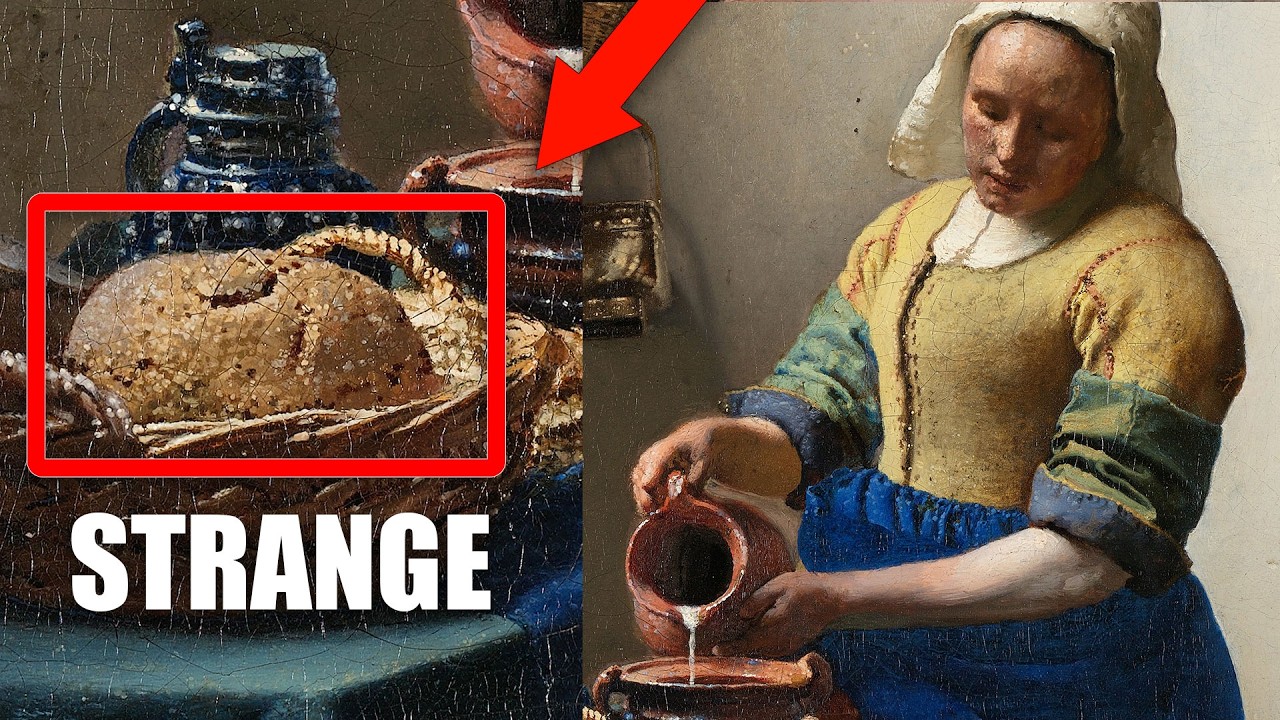
The Milkmaid
Johannes Vermeer, about 1660
Dots of light, a pinhole in the canvas, and two objects he painted out.
Watch “This Vermeer Artwork Has Puzzled People For 350 Years”
-
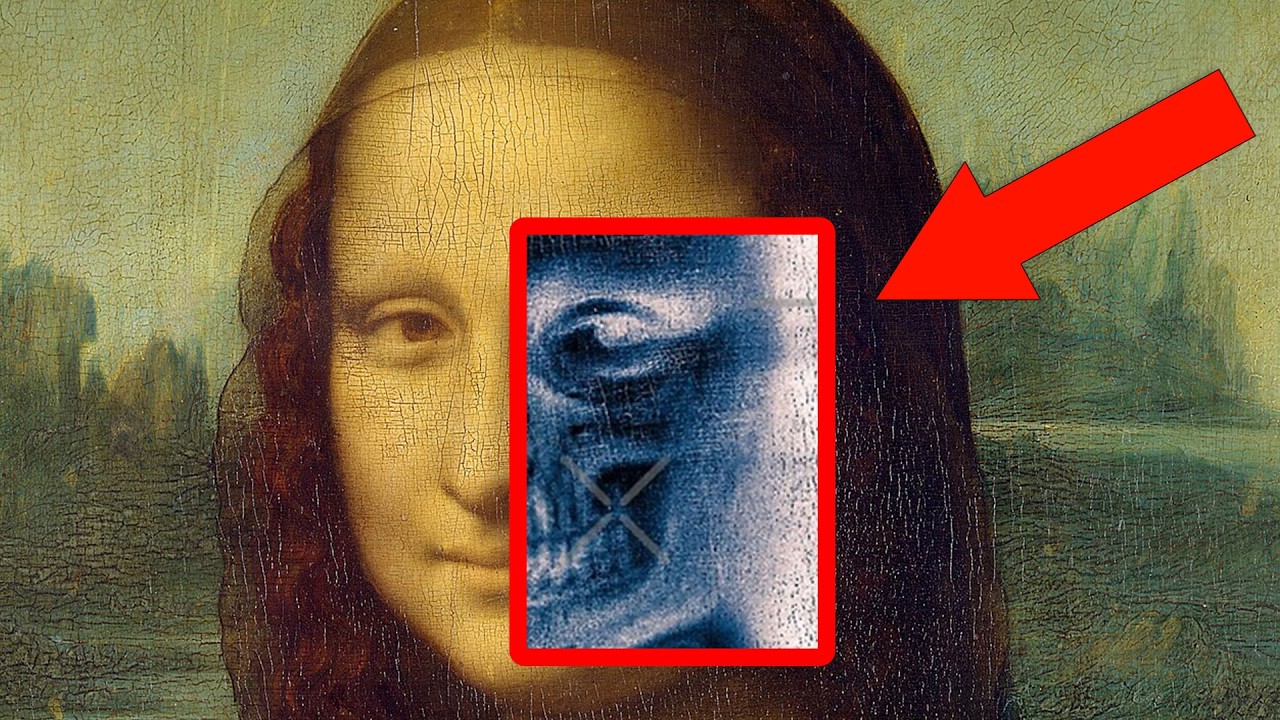
Mona Lisa
Leonardo da Vinci, 1503 to 1519
What a multispectral camera recorded beneath the surface, and which of the claims experts dispute.
Watch “What Scientists Found Beneath the Mona Lisa will Shock You!”
Corrections
In October 2026 we checked seven videos against their sources, line by line: our five most-watched and our two most recent. This is everything we got wrong. The timestamped corrections are also posted under their videos.
| Video | At | What we said | What is correct |
|---|---|---|---|
| The Bedroom | 7:19 | Mark Walton, working out of the Art Institute of Chicago | Marc Walton is a professor at Northwestern University. |
| The Bedroom | on screen | Octuber 1888 | October 1888. A typo in our caption. |
| The Last Supper | 7:47 | funded by an $8 million sponsorship from Olivetti | We could not confirm that figure. Olivetti became the restoration's sole sponsor in 1982. |
| The Last Supper | 9:42 | a tablecloth patterned with tiny millefleurs | The flower pattern is on the wall hangings beside the table, not on the tablecloth. |
| The Last Supper | 10:29 | We presented Peter's hand holding a knife as something the restoration revealed. | The hand and the knife were always visible. They were not a discovery. |
| A Bar at the Folies-Bergère | 4:14 | largely unchallenged for the next 118 years | Thierry de Duve published an explanation in 1998, before the reconstruction we describe. |
| A Bar at the Folies-Bergère | 5:08 | In 1966, Michel Foucault took up this painting in a book | He discussed it in lectures given between 1967 and 1971, published in 2004. |
| The Milkmaid | 2:20 | since the painting was rediscovered in the 19th century | The painting was never lost. It was sold at auction in 1719 and bought by the Rijksmuseum in 1908. What revived was Vermeer's reputation. |
| The Milkmaid | 5:46 | the only two surviving eyewitness accounts describe his sense of perspective | Only one does: Pieter Teding van Berckhout, in 1669. |
| The Milkmaid | 7:21 | The two men were neighbors, and Van Leeuwenhoek is believed to have posed | No contact between them is documented in Vermeer's lifetime. That he posed is a conjecture. |
| Mona Lisa | 2:39 | over 1,600 scans, one wavelength at a time | About 1,650 images, taken through 13 wavelength filters. |
| Mona Lisa | 2:55 | the same 400-year-old painting | It is about 500 years old, painted between 1503 and 1519. |
| Mona Lisa | 6:03 | before ever touching a brush to this canvas | The Mona Lisa is painted on a poplar panel, not on canvas. |
| Mona Lisa | 7:01 | just above her right shoulder | The shape is in the sky to the right of her head, and the published paper calls a hairpin “a possibility”. |
| Landscape with the Fall of Icarus | 2:27 | There's a Flemish proverb: and the farmer, he kept plowing on | That line comes from a 1935 Dutch poem by J. W. F. Werumeus Buning. The proverb the museum links to the painting is “No plough stops for a dying man”. |
| Landscape with the Fall of Icarus | 6:27 | a plowman, a shepherd, and an angler all witness Icarus fall | In Ovid they are astonished to see the two men flying, and take them for gods. They do not witness the fall. |
| Landscape with the Fall of Icarus | 7:32 | No infrared study backs that reading | Christina Currie and Dominique Allart's 2012 infrared examination is reported as supporting it. |
| Las Meninas | 0:00 | On the back wall of this room hang about a dozen dark framed paintings | The Prado identifies two paintings on the back wall, copies by Mazo after Rubens and Jordaens. |
| Las Meninas | 4:06 | for three centuries it was treated as the only one | The other reading is the oldest on record: in 1724, Palomino wrote that the mirror reveals what Velázquez was painting. |
| Las Meninas | 6:54 | Nobody has scanned the paint itself | The Prado has X-rayed the painting, including in 2018. |
Who makes it
Three people.
- Jeremy
- Chooses the paintings and the angle, and directs the channel.
- Lloyd
- Handles the scripts and makes every thumbnail by hand.
- Muhammad
- Edits the videos.
Write to us
Found a mistake? Want us to look at a painting? This address is read by a person.